Custom tattooing
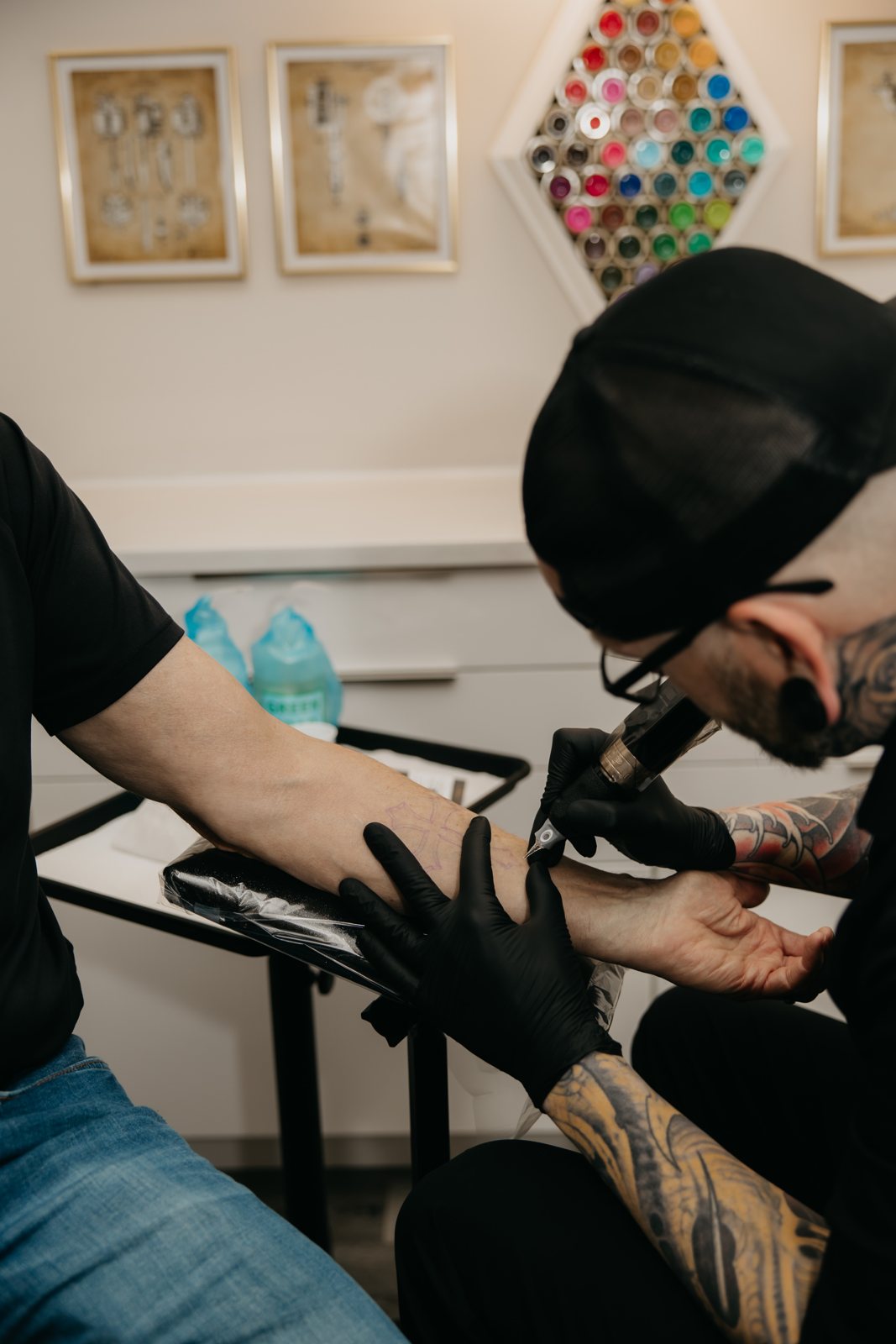
Art that tells your story, made in a private, cozy booth.
Realism, fine line, geometric, American traditional, and script, in color or black and grey, or a mix of all of them. Every tattoo starts with a complimentary consultation.
How it works
The Zion tattoo process
Step 1
Send a request
Fill out the form below. We read every request personally, so please allow 7–14 days for a reply.
Step 2
Complimentary consultation
Talk through the design, placement, and size with your artist. No deposit needed.
Step 3
Book with a deposit
Your artist will give you a price and deposit at your consultation. The non-refundable deposit holds your date and comes off your final price.
Step 4
Your session
Settle into your private booth, with your own shows or playlist if you like.
18+ only. Under Minnesota law, you must be 18 or older to be tattooed, even with a parent’s consent. Bring a valid photo ID, such as a driver’s license, state ID, passport, military ID, or Tribal ID. Before your session, you’ll sign a consent form and a health disclosure form.
Tattoo cancellations need one week’s notice, or the deposit is forfeited. See our policies.
Tattoo request
Tell us about your idea
This form replaces copying and pasting questions into an email. Reference photos help a lot. If it’s a cover-up, please attach a current photo of the existing tattoo.
Prefer email? Write to zionhealingarts@gmail.com with the subject line “New Tattoo Request.”

Meet our tattoo artists
Professional tattooers
During your tattoo
Come as you are. Get comfortable.
- Eat a good meal first. Bring snacks and a non-alcoholic drink for longer sessions.
- Wear comfortable clothes that expose the area. Ink can stain.
- Bring comfort items like a blanket or pillow.
- Booths have TVs with most streaming services. Headphones, tablets, and laptops are welcome too.
- Breathe slowly and release tension on every exhale.
Before your appointment
A tattoo is an investment, so it helps to support your body in the week before. Try to rest well, stay well hydrated, and eat well. You might also consider a quality multivitamin. Please reschedule if you’re sick, recovering from surgery, or hungover. Under Minnesota law, we can’t tattoo anyone who appears to be under the influence of alcohol or drugs. We do tattoo breastfeeding clients once their milk supply is well established, so if you’re newly breastfeeding, please wait. There’s very little research on tattooing while breastfeeding, and a new tattoo can affect milk supply for some people, so talk with your artist and your medical provider first. Please do the same if you’re pregnant or postpartum, or if you have diabetes, hemophilia or another bleeding disorder, epilepsy, seizures or fainting spells, a skin condition, an autoimmune disorder, or cancer, or if you take blood thinners.
Tattoo care
Healing your tattoo
Most tattoos heal on the surface in 2–4 weeks, depending on size, placement, and your health. The surface is healed when it no longer itches, isn’t tender, and isn’t shiny. The deeper layers of skin keep healing for a few months, so keep caring for it gently.
Aftercare with a standard bandage
- Leave the bandage on for 2–4 hours, unless your artist says otherwise.
- Wash your hands with gentle soap and dry them with a paper towel.
- Slowly and gently remove the bandage.
- Gently lather the tattoo with your fingertips, using a gentle, fragrance-free liquid soap such as unscented Dr. Bronner’s. Wash off all plasma, blood, and excess ink. Don’t use washcloths.
- Rinse well and blot dry with a clean paper towel.
- Apply a very thin layer of Aquaphor. Skip oils, including coconut oil, until the tattoo is healed. Repeat the wash and ointment 2–3 times a day for 2 days.
- From day 3, switch to a thin layer of unscented lotion, such as Derma-E, Shea Moisture, Aveeno, Lubriderm, or Hustle Butter. Wash twice a day until peeling starts, then once a day.
Aftercare with a transparent adhesive bandage
Leave the first bandage on for 3–4 days, or as long as your artist tells you. Fluid under the bandage is normal. If it leaks, remove it right away. Peel it back slowly, inch by inch, ideally in the shower. Then follow steps 2–5 above, and continue with step 7.
Applying a second bandage
Make sure the tattoo is clean and fully dry. Peel off the backing and apply from the center outward with light pressure, then remove the clear top layer. Keep your skin relaxed, and leave a 1–2 inch border around the tattoo. Wear it for 3–5 days. If any part of the tattoo becomes exposed, remove the bandage, wash, and restart standard aftercare at step 2.
What to avoid while healing
- Swimming, hot tubs, and baths for at least 2 weeks. Four weeks is better.
- Picking, scratching, or pulling scabs. Pat gently instead.
- Sun, UV, and tanning. Once healed, sunblock prevents fading.
- Alcohol, hydrogen peroxide, iodine, and harsh products. “When in doubt, ask your artist, not Google!”
- Heavy workouts, and touching the tattoo with unwashed hands.
- Stress, excess caffeine, nicotine, alcohol, and recreational drugs.
Ice packs with a clean barrier, for 10–15 minutes, ease discomfort.
Normal healing vs. signs of infection
Normal healing: redness, mild swelling, and tenderness for the first few days. Some oozing of clear fluid (plasma) or ink in the first day or two. Itching, flaking, and peeling as it heals. A cloudy or shiny look for a few weeks.
Possible infection, so see a health care provider: redness that spreads or gets worse after day 2 or 3. Pain, heat, or swelling that keeps increasing. Pus or yellow-green discharge. Red streaks spreading from the tattoo. Fever or chills. A bad smell, or a rash or bumps on or around the tattoo.
If you think your tattoo may be infected, contact a doctor or other health care provider right away, and let your artist know too.