Body piercing
Precise care, from the first conversation to the final downsize.
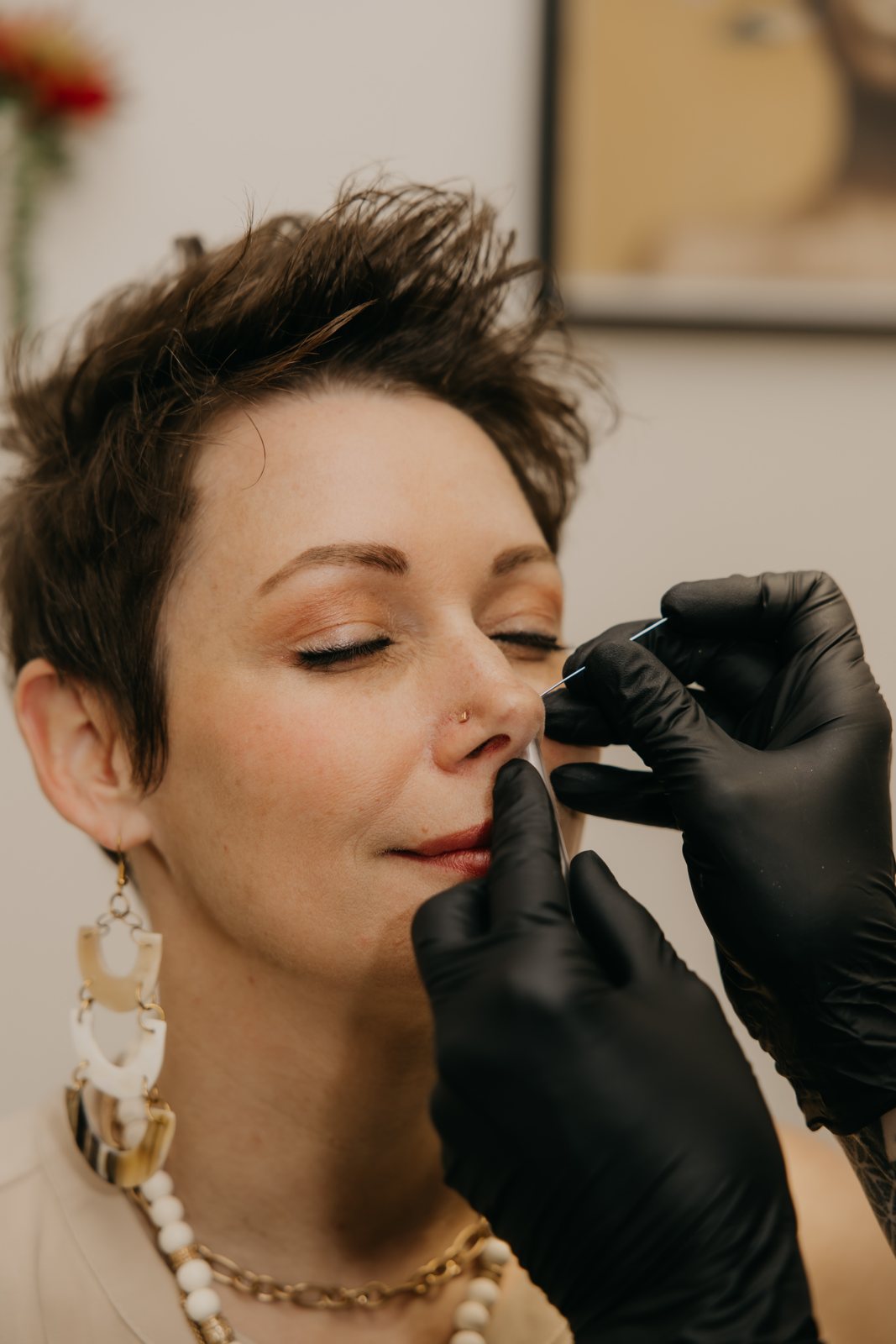
Before your piercing, we’ll help you choose your jewelry, talk through any fears, and teach you how to care for it. During your piercing, we’ll guide you into a relaxed state so it starts well and heals easily. Every new piercing goes home with a complimentary healing gift bag.
Please bring a valid government-issued photo ID to every appointment. For children, bring their birth certificate and a parent’s ID. ID details

Our owner and lead piercer is a proud member of the Association of Professional Piercers. Piercings are by appointment only.
01 · Before
Choose with guidance
We’ll pick jewelry together, talk through your questions and fears, and cover how to care for your piercing.
02 · During
Breathe and settle
You’ll choose your placement with your piercer’s guidance, then settle into a relaxed, regulated state for the piercing itself.
03 · After
Heal with support
You’ll go home with a healing gift bag and written care steps. Follow-up checks are always complimentary.
The piercing menu
Choose your placement
Prices are for the procedure and include a complimentary aftercare bag. Jewelry is chosen together and priced separately, and starter titanium jewelry begins around $65. Heal times are averages and vary from person to person and season to season. Adding a second piercing at the same visit is $40. A pair of earlobes is $95.


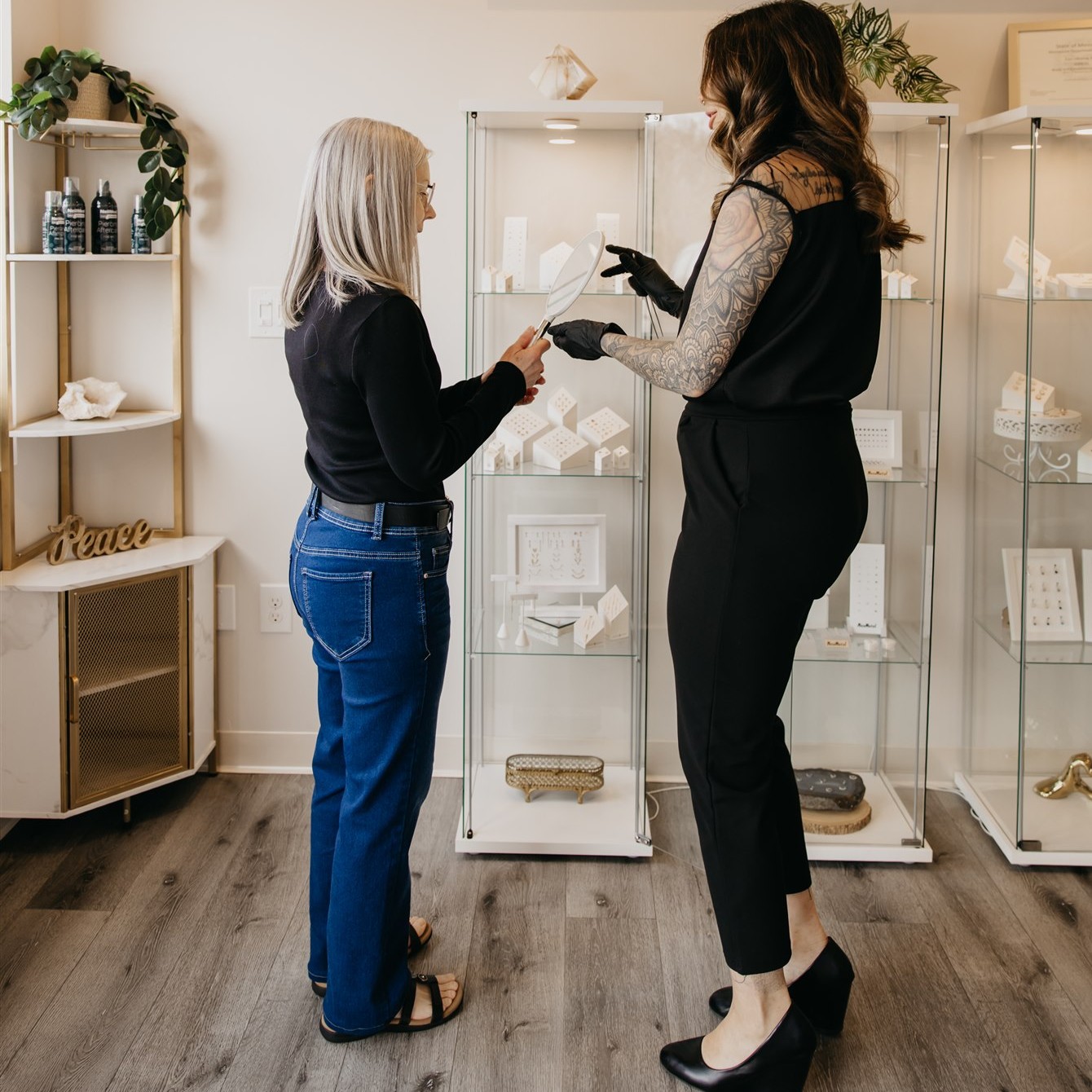
Not sure what suits your anatomy? We can help with that. And once you’re pierced, we’re still here for you. Reach out with any questions while you heal. If something doesn’t feel right, reach out to us. If you see signs of infection, such as spreading redness, heat, increasing pain, fever, or thick green or gray discharge, see your medical provider.
Complimentary 15-min consultationOur jewelry
Only implant-grade. Always verified.
A fresh piercing is a healing wound, so the jewelry inside it matters. We only use materials the body can live with peacefully, from vendors verified by the Association of Professional Piercers.
| Material | Spec |
|---|---|
| Titanium | ASTM F136 (Ti-6Al-4V ELI) or ASTM F1295, nickel-free |
| Solid gold | 14k–18k, nickel- and cadmium-free, never plated |
| Finish | Mirror-polished, internally threaded or threadless |
| Some of our vendors | Anatometal · NeoMetal · Industrial Strength · LeRoi · Buddha Jewelry |
Every piece is guaranteed against manufacturer defects. Mill certificates are available on request.
Jewelry price guide · a rough estimate
Starter titanium jewelry (a post and a top) begins around $65 before tax. A pair for children’s earlobes is around $130. Gold, gemstones, and specialty pieces cost more. Your piercer will give you an exact price as you choose together.
Complimentary · 15 min
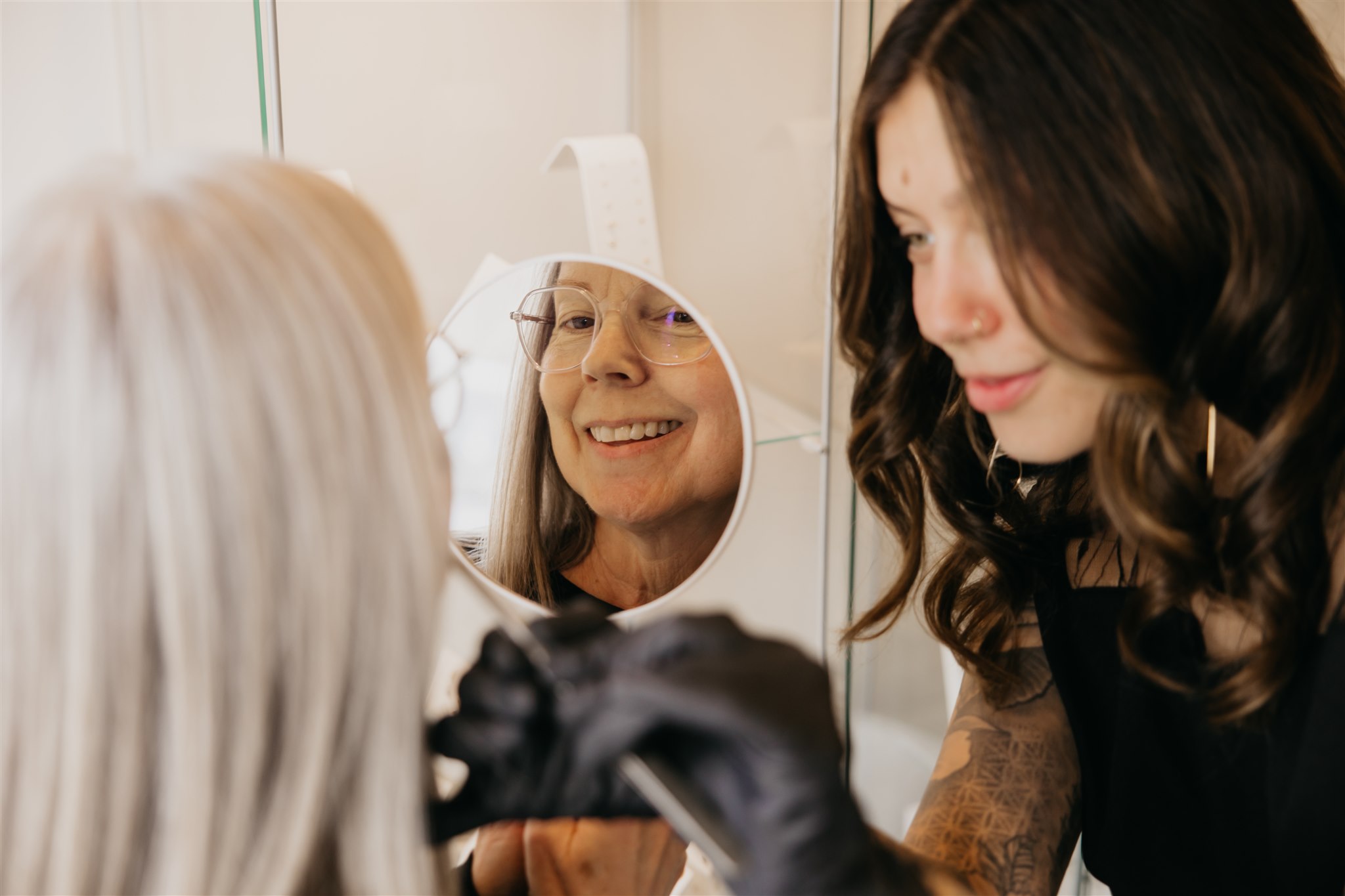
Piercing consultation
Talk through your needs, questions, concerns, fears, ideas, and plans before your piercing appointment.
15–30 min appointments
Jewelry services
- Piercing check-up: complimentary, anytime you need peace of mind
- New jewelry: a shopping appointment, priced by the piece
- Styling and curation consultation: 30 minutes to sit down, go in depth, and get dreamy and visionary about new or existing piercings · $30
- Downsize: shorter jewelry after initial healing · $30
- Change or insertion: for your own jewelry · $30
- Removal of any piece of jewelry · $30
- Jewelry cleaning or sterilization · $30
- Stretch: sizing up with a taper · $45
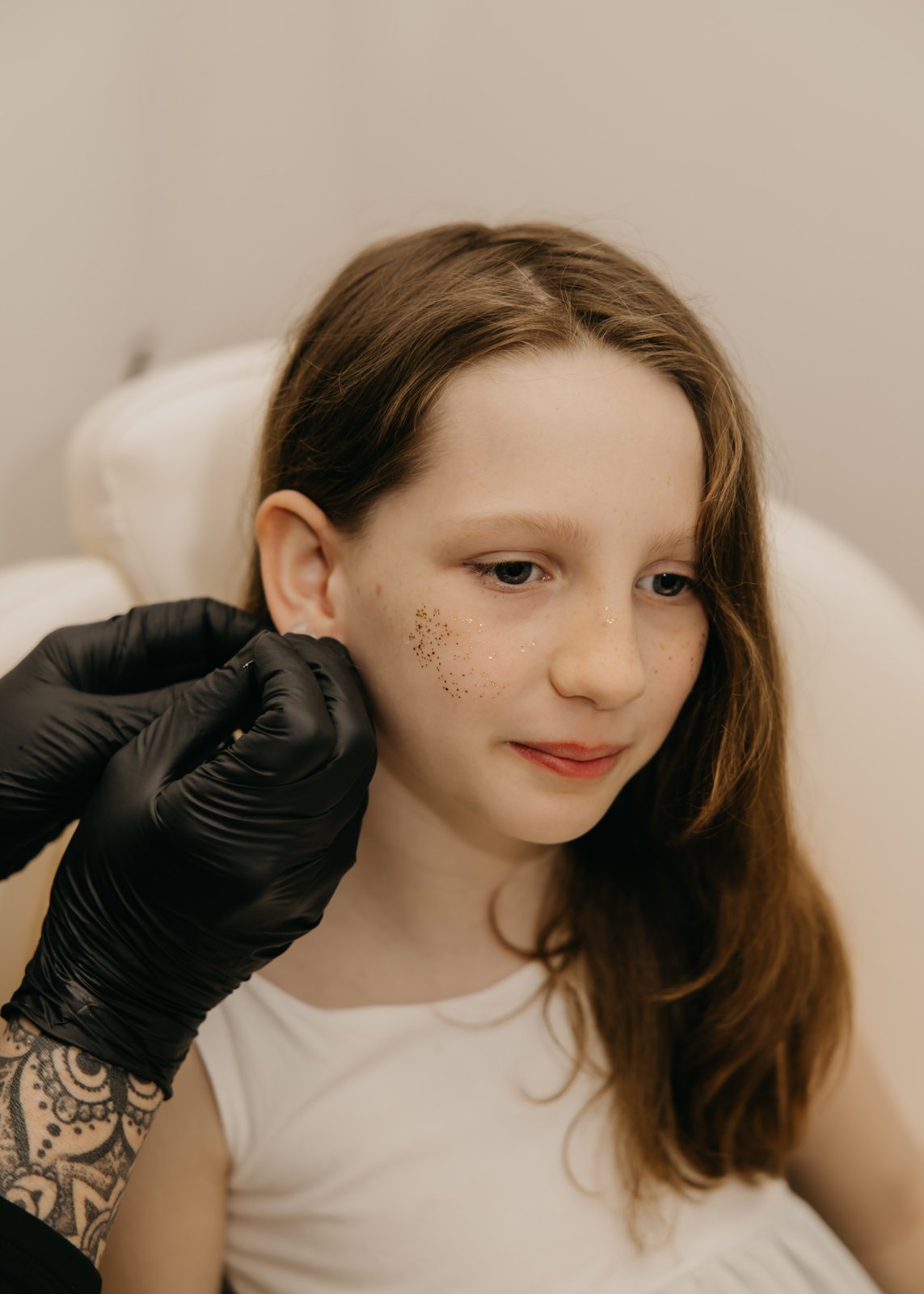
Children’s earlobes
A rite of passage, led by consent
For ages 4 and up. $95 for both ears, sterile needles, never guns.
Everything parents should know →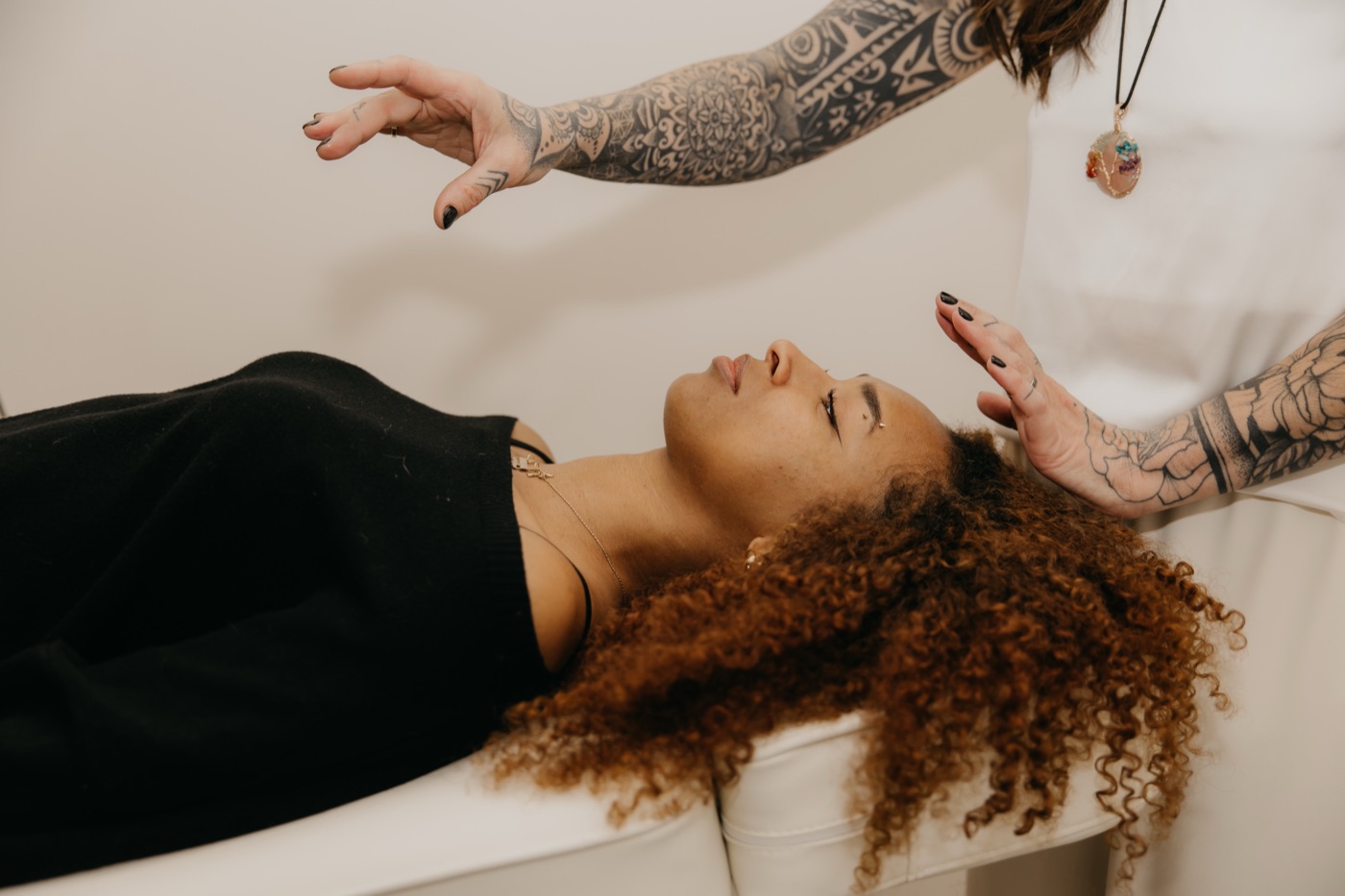
Looking for something deeper?
Sacred Healing Piercing
A 75-minute intentional piercing experience with energy attunement and integration support.
Learn more →Meet our piercers
Professional piercing practitioners
Our piercers are licensed in Minnesota and certified in CPR, First Aid, and Bloodborne Pathogens. They continue their education through the Association of Professional Piercers conference. You can expect a private, clean room, sterile procedures, patience with placement, and real education on caring for your piercing.
Piercing care
“My body is wise, it knows how to heal itself.”
— Louise Hay
Watch our aftercare video for a walk-through of how to care for your new piercing, then keep the steps below handy while you heal.
Before your piercing
Care begins before the piercing, because mind, body, and spirit all affect comfort and healing. In the week before, be gentle with yourself:
- Sleep 8–9 hours a night.
- Drink half your body weight in ounces of water each day.
- Eat a good meal within a few hours of your appointment.
- Eat well. Go easy on sugar and add vegetables.
- Consider taking a quality multivitamin the week before and for 3 weeks after.
Please don’t get pierced if you’re sick, recovering from surgery, hungover, or under the influence. If you’re pregnant or postpartum, please wait. If you’re newly breastfeeding, please wait until your milk supply is well established. If you have an autoimmune disorder, diabetes, cancer, or a bleeding disorder, talk with your piercer and your medical provider first.
Daily aftercare (twice a day)
- Wash your hands thoroughly with soap and water. Dry them with a disposable paper towel.
- Spray both the entrance and exit of the piercing with sterile saline wound wash, like the one in your healing bag.
- Gently remove any crust from the jewelry with non-woven gauze or a saline-soaked cotton swab.
- Pat dry with non-woven gauze or a paper towel. Be sure your piercing is completely dry, because trapped moisture can irritate a healing piercing.
Rinse once a day in the shower with fresh water. If you use soap, choose a gentle one free of dyes and fragrance, and rinse it away completely. Then repeat steps 1–4. Showers are better than baths. If you do take a bath, clean the tub first and rinse your piercing afterward.
More isn’t better: over-cleaning can irritate a healing piercing. Otherwise, leave it alone, and there’s no need to move or rotate the jewelry while you clean.
About saline: use sterile saline wound wash with 0.9% sodium chloride as the only ingredient. Skip contact lens saline, eye drops, nasal spray, and homemade sea salt mixes, which are often too salty. Saline is available at Zion.
Use disposable paper products only, because cloth can harbor bacteria and snag your jewelry. Change your bedding regularly, and wear clean, breathable clothing over the piercing. Exercise is fine; just protect the piercing from bumps, gym equipment, and mats.
Oral piercings
- Brush, floss, and use an alcohol-free, peroxide-free mouth rinse at least twice a day while healing. Don’t overuse the rinse.
- Rinse with plain clean water after every time you eat, drink, or smoke.
- Use a new soft-bristled toothbrush, store it away from others, and gently brush the jewelry to keep plaque off.
- For lip and cheek piercings, also rinse the outside in the shower once a day and with sterile saline twice a day, then dry gently with gauze.
For swelling: let small pieces of ice dissolve in your mouth, keep talking and moving the jewelry to a minimum, and sleep with your head raised for the first few nights.
While healing, avoid: playing with the jewelry, which can damage teeth and gums; straws; smoking and vaping; gum, fingernails, pens, and other objects in your mouth; sharing cups, plates, and utensils; oral contact, including wet kissing; spicy, salty, acidic, or very hot food and drink for the first two weeks; and alcohol and large amounts of caffeine while it’s still swollen or bleeding. Cold foods and drinks can soothe.
Once the swelling goes down, come in to downsize to a shorter post. This protects your teeth and gums.
What’s normal
- At first: some bleeding, swelling, tenderness, or bruising. For oral piercings this is usually the first 3–5 days.
- While healing: some discoloration, itching, and a whitish-yellow fluid (not pus) that crusts on the jewelry. The tissue may tighten around the jewelry.
- Once healed: the jewelry may not move freely. Don’t force it.
Piercings heal from the outside in, so a piercing can feel healed before it is. Keep up your care for the whole healing period. Healed piercings can shrink or close within minutes, even after years, so keep jewelry in.
What to avoid
- Touching the piercing with unwashed hands, and twisting, spinning, or rotating the jewelry.
- Over-cleaning, friction, pressure from tight clothing, and playing with the jewelry.
- Removing jewelry while healing. If it has to come out for a medical procedure, ask us about a non-metal option.
- Alcohol, hydrogen peroxide, iodine, antibacterial soaps, ointments, Bactine, pierced-ear care solutions, and any product with BZK (benzalkonium chloride).
- Cosmetics, lotions, and sprays on or near the piercing.
- Lakes, pools, oceans, and hot tubs. A waterproof, clear film bandage can help.
- Stress, excess caffeine, nicotine, alcohol, and recreational drugs, which can slow healing.
- Oral contact, rough play, and other people’s bodily fluids.
- Hanging charms from the jewelry before it’s fully healed.
When to downsize
Most piercings start with slightly longer jewelry to make room for swelling. Once the swelling goes down, usually 4–6 weeks after your piercing, book a jewelry service to downsize. A timely downsize prevents “drift,” a permanent change in the piercing’s angle. Jewelry fees apply.
Stretching
- Only stretch a piercing that is fully healed and soft. When in doubt, ask us.
- Go one size at a time (half sizes are even gentler), and give your tissue several weeks to months to settle between stretches. Larger sizes need longer.
- Jewelry should slide in with little or no effort. Never force it. Stop if it bleeds, tears, or hurts more than mildly, and go back to your previous size.
- For a fresh stretch, wear implant-grade, single-flare or no-flare jewelry. Skip acrylic, silicone, and organics like wood, bone, or stone until it’s healed, and don’t stretch with tapered “talons” or spirals, or with heavy or hanging jewelry.
- Leave fresh-stretch jewelry in, and care for it like a new piercing.
- Once healed, a few minutes of massage with a natural oil like jojoba keeps the tissue supple.
- Thinning, a “blowout” (skin pushed out of the back of the hole), soreness, or weeping means it went too fast. Size down and wait a few months.
We offer professional stretches with a taper ($45), so we’re happy to help.
Jewelry care and getting help
- With clean hands, check now and then that your jewelry ends are snug. For threadless jewelry, press the top and post together if you see a gap.
- Keep your starter jewelry in until you’ve healed, unless we change it for size, style, or a downsize.
- If you decide to stop wearing a piercing, take the jewelry out (or have us do it) and keep cleaning until the hole closes. Most piercings leave a small mark.
- If something doesn’t feel right, reach out. Most small problems are solved with an aftercare adjustment, and follow-up visits are always complimentary.
- If you think you have an infection, see your medical provider. Talk with them about whether to leave quality jewelry, or a suitable substitute, in place.
Tips for specific placements
- Ear and facial: try the t-shirt trick. Put a clean t-shirt over your pillow and turn it each night for four clean surfaces. Sleeping on healing cartilage can shift its angle, so a travel pillow with your ear in the opening helps. Keep phones, headphones, and glasses clean, wash hats and scarves, and tell your hair stylist about new piercings.
- Navel: a hard, vented eye patch secured with an elastic bandage or stocking (not tape) protects against clothing and impact.
- Nipple: a snug cotton shirt or sports bra adds support, especially for sleep.
- Surface anchors: need lifetime care, because matter can build up under the top. Saline and shower rinses help. Avoid makeup on them, even once healed.